


a visualization by Ha Do
One random afternoon, while scrolling through my Spotify and trying to organize my playlists, I started noticing how the genres I listened to in college, even just a year ago, are different from what's on my current rotation. As my own taste shifted every time I move to a new place, I began to wonder: have the world's music genres migrated too?
Looking at super genres
The concept of music genres is a modern one — an attempt to categorize songs into shared sonic references. Many different systems of taxonomy exist, but I was drawn to musicmap.info's that visualizes umbrella genres, called super genres, and chronological styles morphing into one another. Below are all the super genres:
Ready for an adventure?
After mapping the timeline of genres, I noticed that the family tree on musicmap.info shows how some genres morph into each other, while others branch off in their own directions. That chronological evolution sparked a new question: where did they migrate geographically?
Here's how widespread some of our super genres have become in 2023, according to everynoise.com/countries.html:
Hip Hop
117 countries
Pop
130 countries
Jazz
50 countries
Gospel
26 countries
House
22 countries
Industrial
5 countries
...to going across borders
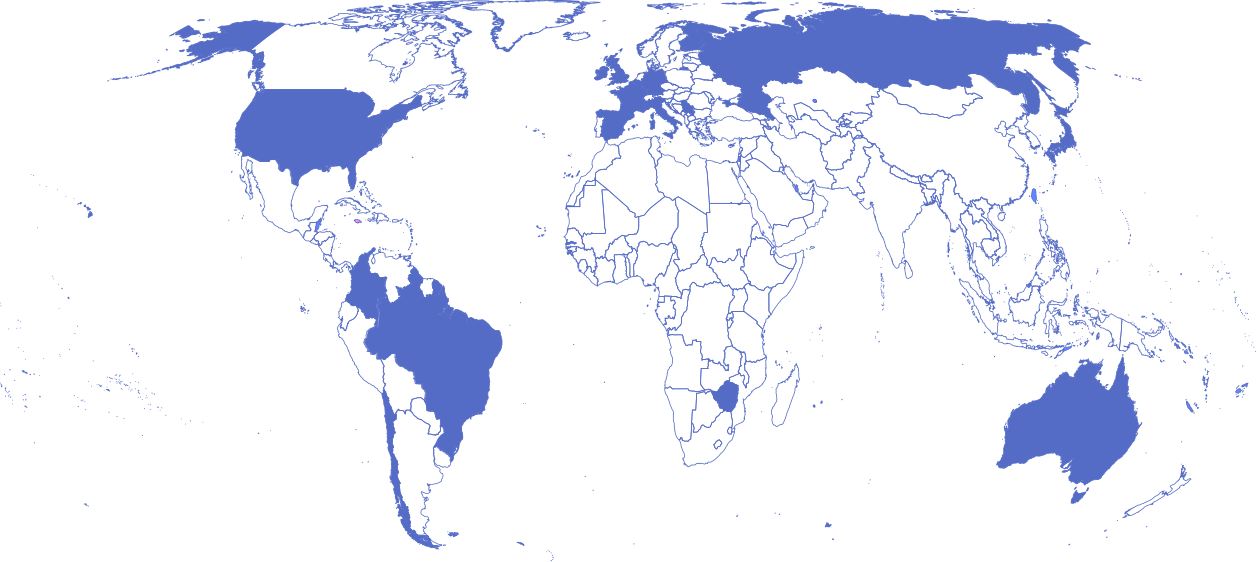


Map of Reggae's influence in 2023
ReggaeDancehallJazz RapReggae fusion /Bhangramuffin
Lovers Rock /UK Reggae
DubOld Skool Rap PioneersNew WaveMusic changes as people change
I've been conscious of my music-listening habits for as long as I can remember, but something hit differently after visualizing how music has traveled and evolved alongside us. The data made me wonder about my own genres—the ones that moved with me as I moved to new places.
What happens when a genre transforms into something else? Who documents its lifespan? What does it mean when a sound “dies” only to be reborn in a new form?
We are living in a world where a genre can be called by many names. This dataset only shows a slice of the Western-defined categorization of music genres, so it could be beneficial to look at it critically and investigate how genres are referred to in different cultural contexts. Spotify Wrapped does a fair job of summarizing your personal genres, but perhaps some day you might want to take a look at its full chronological and geographical history before they go somewhere new…
Methodology
To build this dataset, I worked with two main sources: musicmap.info and everynoise.com
Musicmap provided the historical taxonomy of music—each super genre, its subgenres, and their respective years of origin. Using Python, I extracted and cleaned this information to create a chronological dataset of when and how genres first appeared.
Everynoise offered a more contemporary perspective, showing how these genres are distributed across countries in 2023 based on Spotify's global data. I used Python again to pull and format this data, making sure genre and country names matched consistently between both datasets.
Once the data was cleaned, I combined the two to trace each genre's temporal and geographical spread. The map visualization was built using an equal-area world map, ensuring that country proportions were visually accurate. All design, color coding, and interaction logic were implemented manually in Figma and Illustrator.
This visualization intentionally excludes broader categories like classical music to focus on contemporary, globally distributed genres and how they've evolved or migrated through time.